Types of Yarn for Knitting or Crochet
Learn more about the different kinds of yarn with this helpful article.
Learn all about the Types of Yarn for Knitting or Crochet. Different fibers of yarn will result in completely different results in your piece or garment. You want to be familiar with the different kinds of yarn fiber and how they will work in a knitting or crochet project.
For example, there are certain types of yarn you wouldn't want to use for dishcloths and washcloths. Visit our article on the Best Yarn for Dishcloths to learn which yarns to use and which to avoid.
When it comes to garments, wool may be perfect for some but less-than-perfect for folks with a wool sensitivity. Acryllic yarn has its pros and cons, as do any of the types of yarn! To make a great choice for your next project, consult this list of different types of yarn before you begin.
Types of Yarn for Knitting or Crochet
Synthetic Fibers
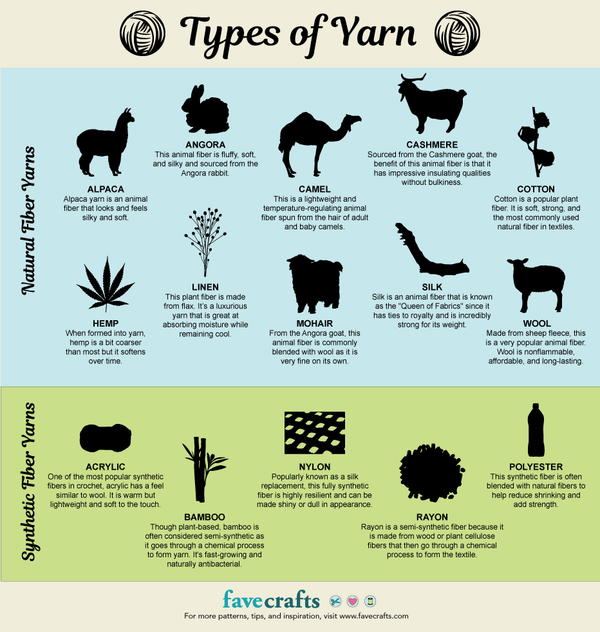
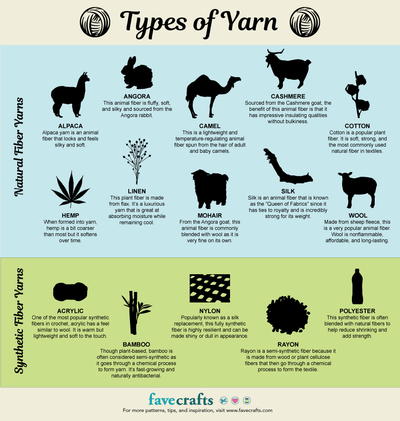
Nylon, rayon, acrylic, viscose, and polyester are all synthetic fibers that appear in yarn. 100% acrylic yarn is a common choice as it is the most inexpensive yarn. This makes acrylic yarn a good choice for those just learning how to knit or crochet.
Blends
Many yarns blend different natural fibers, synthetic fibers or natural fibers with synthetic fibers, such as for a softer feel. If you want to felt your knitted or crochet project, you must ensure the yarn is at least 80% wool, but the other 20% can be synthetic.
Natural Fibers
-
Cotton- Made from cotton plants, many types of cotton yarn are treated with chemicals to make them more durable, mildew resistant, and able to accept dyes better. Some environmental concerns have been raised with traditional cotton production though.
-
Wool- Many different kinds of wool exist and are spun into yarns with different weights and textures. Wool accepts color very well and is very warm. Merino wool yarn is a popular choice in making garments.
-
Cashmere- Cashmere, from the soft undercoats of cashmere goats, is a more expensive yarn which is especially smooth while still retaining warmth.
-
Alpaca/Llama- South American llamas or alpacas produce very soft, warm yarn. Llama wool yarn is less soft and bulkier. Alpaca and llama wool is non-allergenic, since it does not have the lanolin found in lamb’s wool. This yarn does not accept color as well as wool though.
-
Mohair- Mohair is a thick yarn from the Angora goat with an especially fuzzy look.
-
Angora- Angora is an especially soft rabbit fur yarn which has a fuzzy appearance.
-
Linen- Linen yarn is made from the flax plant and is a lightweight yarn perfect for summer garments.
-
Silk- Silk comes from silkworm larvae and is very smooth and light. Since silk does not have much stretch, silk is generally combined with other fibers for yarn, often cashmere for a truly-luxurious yarn.
Eco-Friendly Yarns
-
Organic Cotton- Cotton created without synthetic fertilizer or pesticides and, when made into yarn, without chemical dyes.
-
Bamboo- Bamboo yarn has the feel of silk and is very strong. Bamboo is a renewable resource because it can be harvested without killing the plant, which then regenerates the removed bamboo in a couple of months.
-
Hemp- Hemp is another renewable resource which can be grown without pesticides or herbicides and is the strongest natural fiber. Hemp yarn garments are softer with each machine washing and can be treated for softness as yarn. Check out LanaKnits to read about and purchase Hemp yarn.
-
There are so many yarn types out there!
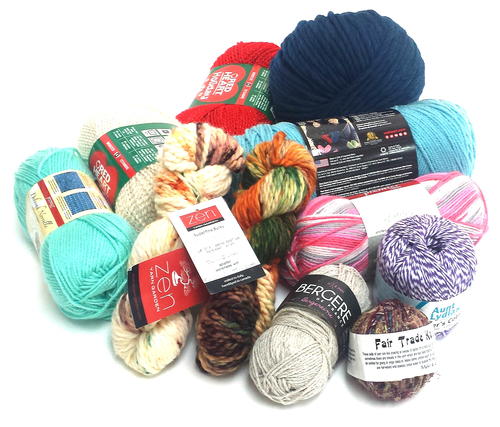
What is your favorite type of yarn?
Read NextCityscape Hat
Your Recently Viewed Projects
Thanks for your comment. Don't forget to share!


KathrynAllison
Jan 06, 2017
This article is very helpful. With so many different types of yarn available, it's nice to have all the information you need in one convenient place.


Report Inappropriate Comment
Are you sure you would like to report this comment? It will be flagged for our moderators to take action.
Thank you for taking the time to improve the content on our site.